January 25, 2009

Moving

We've packed up. We've moved out.  And, as of today, it's official!  

We're bidding farewell to our lovely blogpost-hosted blog.

From this post on, you can visit us at: www.fromthepewsintheback.com.  We'll no longer be updating this blog, so we appreciate you updating your bookmarks.

We're also updating our email address: fromthepewsintheback@gmail.com

See you over at our new website & email!

Jen & Kate

Read more!

January 22, 2009

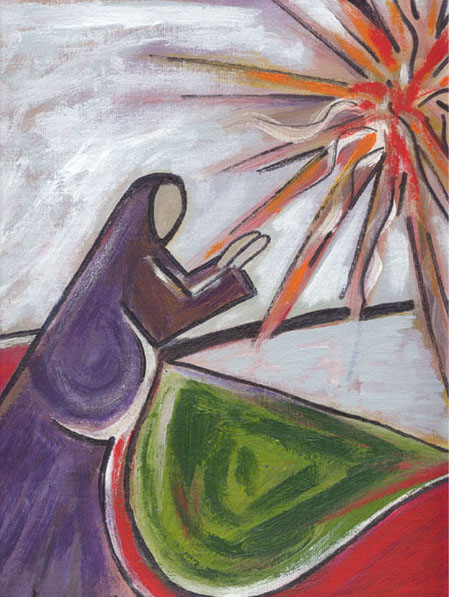
Waiting for David: 1 Samuel 16

This is the first of a three-part series by Felicia Schneiderhan on 1 & 2 Samuel.

A turning point in my faith came when I stopped disagreeing and debating with everything I read in the Bible ("Nobody lives to 800!"). I began reading the Bible as a story of how people relate to God. And then I opened Samuel, which is the story of how I relate to God.

Samuel, the prophet, is mourning because the first king, Saul, is not doing so hot. God tells Samuel to go see Jesse of Bethlehem, that one of his sons will be the next king.

In Bethlehem, Jesse parades out seven sons. They all look like strong men who would make a good king and Samuel's ready to pick one. But God tells Samuel, don't focus on outward appearance – God looks at the heart; and as each of the seven pass in front of him, Samuel knows he's not the one. When all seven have gone by, Samuel asks Jesse, "Are these all the sons you have?"

When I heard this read in Mass one Sunday, I laughed out loud. Samuel has just seen seven fit, strong, intelligent young men, and he has the gall to ask Jesse, "Um, do you have any more sons?"

Of course, there is one – the youngest, out tending the sheep. Samuel tells Jesse to send for him, that they won't sit down till he gets there. Maybe you know the rest of the story – ruddy little David appears, God tell Samuel, "Rise and anoint him; he is the one," and David starts his journey to becoming Israel's king.

We never know what we'll find in the Bible that we will relate to, what story will open up the text for us, show us how applicable it is in our lives today. For me, this story suddenly made the entire Bible very alive, very current.

I am like Samuel in nearly every decision I make. I get nervous about making important decisions and, afraid I'll chose wrongly, or that I won't get what I need, I'll grab the first thing I see because it looks fine on the outside. My impatience is based on fear and selfishness. I fear the space of not knowing, and so I make a decision as quickly as possible to fill it up.
But I am learning to wait. I am learning to go where God leads me, and then wait for His choice to appear.

Last month, my husband and I moved from Chicago to northern Minnesota. For two months I searched for a place to live and kept coming up with nothing. Things would seem fine out the outside, but something would tell me, wait, wait. And then, two weeks before we were set to move, when I was starting to get a little panicked, we found a place more perfect than we could have imagined. It's better than anything I could have requested from God, reminding me that His will for me is always better than any laundry list of requests I could write.

Like Samuel, I have to remember just to keep standing until the right king appears.
***
Felicia Schneiderhan is a freelance writer based in Duluth, Minnesota.
Photo from Felicia's camera.  Her own, Duluth-based David.

Read more!

January 20, 2009

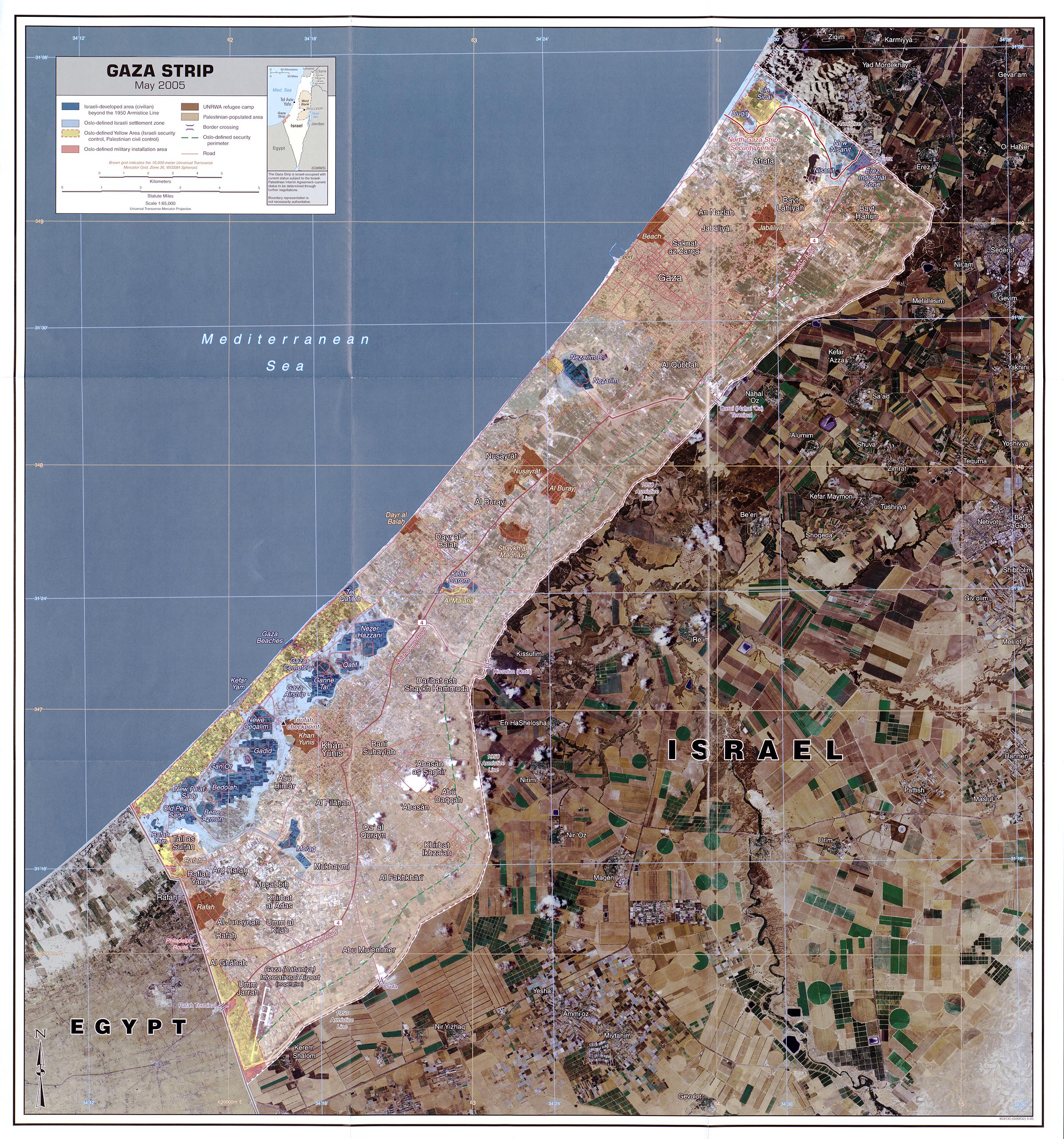
Reflection: Gaza

I’ve had this church song in my head for awhile. It’s a psalm, and the refrain goes, “Come, let us go rejoicing, to the house of the Lord.”

I ignore it until I can’t anymore, this war in Gaza. I let it drift around with the song until I get to the third verse: “Peace in Jerusalem, peace in our homes, and peace within us forever.”

So I look, at the pictures and the articles. The thing that splits me to the core—it’s not the images of broken bodies. To those I react, suddenly covering the picture with my hand, but the horror keeps my center frozen.

I watch a video of anti-war protesters in Israel, and the counter-protesters are chanting “Traitor” at the peaceniks, and they’re thrusting their hands out in front of them in this way, out in front high up near their faces—

Before I’ve finished seeing, I’m making a noise of awful grief, a high noise, without tears really, and my hand covers my face. I don’t want to see this, these young Jewish men, looking like Nazis.

Please understand. I’m not saying this horror is on the level of the Holocaust. But what I see is a circle of hate, and I see it closing, spinning on itself.

This war is unjust, and the lives it tears may stretch or be pulled, to add to the circle, to enclose us all further.

I pray for peace in the world. I pray for the courage that engenders peace, in Jerusalem, our homes, within us—the courage to fear each other less, even when the threat is real.

Without this grace, we will always be ready to cause harm, and the trap will close. With this grace… well, let us try it, and see.

Photo from: http://www.lib.utexas.edu/maps/middle_east_and_asia/gaza_strip_may_2005.jpg

Rebecca Fullan has faith, seeks understanding. And sometimes vice versa.


Read more!

January 18, 2009

Here I am (now, whaddaya want me to do?!)

We were on our way back from a spring break service trip to Kentucky, where we spent a rain-drenched week helping build houses with the Christian Appalachian Project. Having spent the night on our two-day trek back to Massachusetts at a hotel in Philadelphia, I dragged my weary body to the lobby to grab some free continental breakfast. The "morning people" in my group (I'm definitely not one) were already finishing off their cereal, muffins, and cups of bad hotel coffee when I arrived, but Jaime, our campus minister, stayed at the table with me so I wouldn't have to eat alone. As we chatted about the week, Jamie asked, somewhat casually, "Have you ever thought you might have a calling to ministry?" At that moment, something clicked. For just a split second, everything seemed clear. It wasn't a dramatic thing - I didn't jump out of my seat and yell "Here I am, Lord!" or prostrate myself on the ground and sigh "Speak, for your servant is listening." But in a more subtle way, in that moment, I felt myself open up to whatever it was that was pulling me. What that was, I had no idea, but somewhere deep inside, I answered it anyway.

Lately, this brief moment of clarity seems a distant memory, and I look back at my younger self, so sure and so eager to answer the call, with envy. I finished my MDiv in June, yet I feel directionless, and, lacking something concrete to orient me, I'm frustrated and restless. I find myself constantly questioning the whole concept of calling. I want to know what I'm called to do. I want clear directions from on high, blueprints for the ark, to hear the still, small voice tell me "this is your life's work, go and do it" – and then give me clear and specific directions for how to get it done.

But today's readings remind me that that's just not how it works. In the first reading, Samuel answers God when his name is called. Despite Samuel's words, "speak, for your servant is listening," the passage doesn't tell us what God said back. In fact, it doesn't even tell us that God spoke back. For all we know, Samuel didn't hear anything concrete in reply, yet we are assured that God was with Samuel, guiding his life and work. Similarly, in the Gospel reading, Andrew drops what he's doing to follow Jesus, despite not knowing, really, what he was getting himself into. I imagine that when he saw Jesus, and heard John refer to him as the Lamb of God, he had a moment like mine, where something clicked and things felt clear, though he had no concrete idea of what to expect. I know that others have answered a call without knowing what, exactly, the call is. This doesn't make me feel any less frustrated, and it certainly doesn't erase my desire to have plans laid out for me. But it does help to be reminded that, just because we don't have a clear idea of what our calling is, doesn't mean that we aren't answering it. Perhaps, like Samuel, even as I type, God is ensuring that my words will not be without effect?

Kate Henley Long is a nanny, choreographer, queer activist, writer, and wannabe TV critic. She lives with her partner in Cambridge, MA, and spends much of her time in a general state of religious and existential crisis.

Read more!

January 16, 2009

My Aunt Mary

From the Pews in the Back is becoming more and more real every day (we just received the proof pages!). As Jen & I gear up for the book's printing, my mind is wandering more frequently to the kinds of conversations and questions that might happen around this book.

My Aunt Mary is my dad's oldest sister. She's in her mid-60s and was at a Franciscan college during Vatican II. She loves the liturgical changes and is always ready for a theological debate. I saw her over Christmas and she was eager to tell me that she is an avid reader of the Call to Action Young Adult Catholic blog. A friend of hers had forwarded her the link and they both read daily and discuss it occasionally.

This is so exciting to me! I love that these women are excited about what young adult Catholics are thinking and blogging about....and I am very impressed by their tech-savviness.

I am hopeful that this book and blog engage conversations and discussions.

What kind of conversations would you like to have with Catholics of older or younger generations?
Kate Dugan is one of the co-editors of From the Pews in the Back and is indebted to Aunt Mary for countless conversations about American Catholicism.

Read more!

January 14, 2009

The Adventures of Catholic Woman

There are times I feel like I am a character in a comic book when it comes to my faith. Like Superman, who is considered the representative of all the positive ideals of America, I feel that people see me like that with regards to my faith – that I am Catholic Woman, fearlessly swooping in and taking care of their Catholic needs until there's a happy ending. That would be fine except for the following:

1. I don't have any superpowers.

2. I don't have a costume.

3. I'm not the positive embodiment of being Catholic.

To explain where my idea of “Catholic Woman” came from: a good number of my everyday friends and acquaintances are not Catholic, so I am called upon to answer questions about Catholicism. Most of these questions are along the lines of “Why do Catholics do/believe (fill in the blank)?” and I'll happily answer those as best I can. In the course of answering the question, there is an assumption that I agree with everything the Church says, when in reality I don't. So the question I face next becomes, “Well if you disagree with it, why are you still Catholic?”

I am still a Catholic – partly out of cultural identity, but also out of a true belief that despite my odds with the Church I still feel that this is where I belong. I believe I can make the Church stronger due to my disagreements than by leaving. However, from what I've gathered from others, is that if I identify as a Catholic, then I must (in their opinions) agree with everything.

Spare me the cape and tights, and while I'd like the superpowers I don't think they'll be coming anytime soon. I'm not “Catholic Woman” fearlessly flying into the ecumenical problems of the world and offering up the “right” Catholic answer to those in need. The beauty of the Catholic Church is that it is universal; there is no one embodiment. We are many, we are wide-ranging in looks and temperaments. Our faith, however it may come and whatever its strengths, is greater than any superhero ever could be.


Sarah Albertini-Bond fully confesses to not being a superhero but thinks superpowers would be cool and is not sure she could pull off a cape.

Read more!

January 11, 2009

Mark 1:7-11: Cindy's in El Salvador

As I sat down to write this reflection, I opened my e-mail to find a note from my soul-sister Cindy, who is traveling through Central America and spent the day in El Mozote, El Salvador, the site of the 1981 massacre of more than a thousand civilians by graduates of the School of the Americas (now known as the Western Hemisphere Institute for Security Cooperation, or WHINSEC). From my cozy office in Wisconsin, I am tearing up reading her description of the city today – twenty-eight years later there are still visible bullet holes and bloodstains.

Cindy and I first met in a big red house in south Minneapolis when we had the good fortune of being part of the St. Joseph Worker program, along with three other (brilliant, charming, and gorgeous) women. We lived together, prayed together, ate together, and grew together. Cindy and I worked in ministries that put us in relationship with our immigrant neighbors – Cindy as a medical translator, and I in a transitional home with immigrant women. As the days passed, I had the joy of watching Cindy grow, of cheering her on as she became more confident of herself and her desire to make our world and our church always more loving and hospitable.

This week's gospel reading is Mark's story of the baptism of Jesus, which in this gospel marks the beginning of Jesus' public ministry. It some ways, it doesn't make sense why the sinless child of God would be baptized. But if we think of baptism as more than simply the forgiveness of sins, it becomes clearer. Baptism is always a beginning. It is a formal initiation rite in which we also mark ourselves as children of God. To each of us at our baptism, God has said, "Behold my beloved; with you I am well pleased." With these words, God commissioned Jesus, and all of us, to spread the good news of healing and welcome. We do not go out to serve each other to make God love us – we do it because we are so loved, and we can't bear to keep it to ourselves.

This Sunday also marks the beginning of ordinary time in the liturgical year. I like that the baptism of Jesus starts this season off. Remembering such an extraordinary event as the heavens parting and God's voice ringing out reminds us that even the average and the everyday is a chance to be suddenly surprised by the ways God works in our lives.

As my year with the St. Joseph Workers went on, I found myself "commissioning" Cindy in various ways. "I've never done anything like this before," she said at the first anti-war protest we attended together; by the end of the year, she was dragging me onto the streets. "Can I say that?" she'd ask when she had shocked herself with her righteous anger; "Yes, Cindy! Trust yourself!" I would say. She hasn't stopped since. And I sit here and I imagine her in El Mozote, and I know that she continues to follow God's call in every way she can, even when it's heartbreaking or scary.

Cindy, too, has been the voice of God in many of my days, calling me beloved even when I didn't feel it. "Oh, Johänn," she'd say (her nickname for me), "you're so brave." Or smart, or kind, or beautiful, or passionate, or any number of superlatives I couldn't believe about myself unless she said it. She drew out parts of me that I didn't know I had – a fierce protectiveness and more patience than I've ever exercised. She continues to teach me that being the beloved of God means following the call to border towns, to the gates of Ft. Benning, to El Mozote, to shelters and seminaries and wherever the journey takes us next.

Picture from the author's collection. From right, Cindy, Johanna, and one of their soul-sisters and housemates, Berit, at the Minneapolis March for Immigrant Rights, 2005.

Johanna Hatch is a feminist activist, writer, and amateur hagiographer living in Wisconsin and working in non-profit administration. She is a graduate of the College of Saint Benedict and the recipient of the Katharine Drexel Scholarship at the Washington Theological Union. She currently resides in Wisconsin with her spouse Evan.

Read more!

January 8, 2009

Vulnerability and Prayerful Discernment

Reading today’s Gospel, I felt uncomfortable. I find that a feeling of discomfort around something I come across in Scripture or in life usually points to something bigger that I should start paying attention to.

I felt uncomfortable because I identified with the “man full of leprosy,” this incredibly vulnerable person whom Jewish society rejected and deemed necessarily sinful by virtue of his physical state, an apparently humble person who threw himself down on the ground when Jesus approached, pleading with him to make him “clean.” When push comes to shove, I don’t like to think of myself as vulnerable, nor does the idea of being unclean necessarily appeal to me. Quite to the contrary, I would rather think of myself as perfectly capable of dealing with whatever comes my way, and like most people, I would imagine, I like to think of myself as a good person, not any more sinful or unclean than the next person. But here it is, just the same—that discomfort, that reminder that just like the leper in the story, I am filled with vulnerability and in need of Jesus’ healing.

And I felt uncomfortable because I identified with Jesus, too. I like to think of Jesus as the ideal person, in some ways, an example I’d like to emulate. Today’s reading made me realize that I have come to make an idol of busy-ness, of doing, that my expectation of Jesus was to bustle about, healing every ailing and vulnerable person he came across. Yet his example convicted me, helped me realize that I don’t want to take the time to “withdraw to deserted places to pray” as Jesus did. I’d much rather busy myself with the good work to which I feel called, but, in reality, discernment is ongoing. With the end of my MDiv now in sight, I need to be right in the thick of that prayerful discernment in the months ahead.

Moving forward into the day, to what vulnerabilities does this Gospel reading call your attention? To which deserted places are you being encouraged to withdraw and pray?

Jen Owens took the above photo on her first full day in Belize City, Belize, around this time last year, when she accompanied two University Ministry staff members and ten Marquette students on a service and immersion trip there. Jen still wears the solidarity ring that Fr. Dick Perl, SJ, gave her and the other participants, because it makes her feel just a little bit uncomfortable.

Read more!

January 7, 2009

New Year's Resolutions

I can't help myself. This time of year always gets me into the resolving mood. Increase the number of miles I jog a week. Start yoga. Find a meditation group that I like. Cut mint chocolate chip ice cream out of my diet. Keep my personal blog updated. I'm always disappointed in how stereotypical I am about it...and amazed by how my resolve crumbles by my birthday at the end of February.

And it's a beautiful time in the Catholic calendar. We start of the year celebrating Mary, reminding ourselves of the potential for goodness and sacredness all around us. It is an invigorating time of the liturgical year

I have a friend who thinks about New Year's Resolutions in a beautiful way. In recent years, she has decided that her re-commitment to ideals around the first of each year would be less about a "grin & bear it" resolve and more about a change in attitude approach. Her approach makes January a month of reflection and evaluation and deciding how to direct ourselves in the next year, rather than guilt-ridden re-commitments

I like it. I'm inspired by it.

What are you inspired by this January?

Read more!

January 1, 2009

Highlights!

As 2008 ended and 2009 begins, we are reminded of how much we've enjoyed the outgoing year with From the Pews in the Back. These are our top five highlights...

#5: Learned about copyright law in December. We're now buddies with Oregon Catholic Press.

#4: Moved headquarters from Milwaukee & Juneau to Cambridge & Olympia.

#3: Presented at the College Theological Society Convention in May. Gratitudes to the Women & Religion conveners.

#2: Expanded the blog in October. Three cheers to all our contributors!

#1: Found a publisher in March! A deep bow of thanks to Liturgical Press.

Blessings and peace be with you in the year ahead,

Kate & Jen

Read more!

December 25, 2008

Oh Holy Night!

As I write I’m proctoring my last religion final. Alleluia! Nevermind the fact that I still have to grade these finals and read 85 two week old essays I still haven’t gotten to. For the first time this long December I finally feel like rest is near. Very soon I will be on the road home and ready to celebrate with my family. This is our fifth Christmas without my mother, and the holidays haven’t been the same without her. The last Christmas we celebrated together my mom was so physically sick with the cancer she was battling that my sister and I had to take care of everything my mom usually did – decorating the house, shopping for my little brother and sister, writing Christmas cards, baking and cooking Christmas dinner. I remember that night after we had finished cleaning from dinner my mom told my sister Stefini and I that she was proud of the job we had done. We cried as she told us she was no longer worried about leaving our younger siblings behind because they had us to watch over them. Exactly three weeks later she was gone.

I can’t help but have bittersweet emotions this time of year. The light and joy of the Christmas season is slightly darkened by the absence of my mother. What used to be my favorite holiday isn’t quite the same without my mom there to decorate the tree, to lock us out of the room so she could wrap presents or to tell us all to hurry up or we would be late for Christmas Eve mass. Especially now that my nieces are growing up, I wish more than anything that my mom was still with us on Christmas morning when my bundled-in-blankets-siblings and I would gather in the family room for my father’s annual Christmas morning prayer and reminder of how lucky we are because “back home in Tonga we were lucky to get an orange for Christmas.”

My mom’s favorite Christmas song was Oh Holy Night, perhaps subconsciously the reason why I have ten different versions of it on my iTunes Christmas playlist. I play the song over and over and sing along, but never thought much of the words. Yesterday I pulled up the lyrics and read along to John Legend’s rendition:
Oh holy night
The stars are brightly shining
It is the night
Of our dear Savior’s birth
Long lay the world
In sin and error pining
‘Til he appeared and the soul felt its worth
A thrill of hope
The weary world rejoices
For yonder breaks
A new and glorious morn
Fall on your knees
Tears fell down my cheek.
Oh hear the angel’s voices
The memory of mother’s voice echoed in my heart.
Oh night divine
Oh night when Christ was born
Oh night divine
Oh night divine
I started to understand why this song was her favorite. A convert to Catholicism when I was 5 years old, my mother’s sense of faith always amazed me. I remember studying theology in college and calling my mom for her perspective that was so different from mine. She taught me so much about this faith I love.
Led by the light of faith serenely beaming
With glowing hearts by His cradle we stand
So led by light of a star sweetly gleaming
Here come the wise men from Orient land
The King of Kings lay this in a lowly manger
In all our trials born to be our friend
With tears streaming down my face I listened to John Legend belt out the song and I was finally in tune with the true Christmas spirit – not the Santa Claus-holiday sale-merry materialistic Christmas decoration wonderland kind of spirit, but the awestruck-wholeheartedly grateful for the gift of Incarnation spirit. My eyes danced across the last verse.
Truly he taught us to love one another
His law is love and His gospel is peace
Chains shall He break for the slave is our brother
And in His name all oppression shall cease
Sweet hymns of joy in grateful chorus raise we,
Let all within us praise His holy name
I think of my mother. This is my prayer this Christmas.
May we love one another.
May we only live by the law of love and the gospel of peace.
May we work to break chains wherever they bind.
May we see everyone as sister and brother.
May we toil to end all oppression.
And may we forever sing hymns of joy and praise His holy name.
Amen.
Merry Christmas!

Tefi Ma’ake looks forward to her two weeks of Christmas break, to spending the Holidays in the chilly San Diego weather, to watching her nieces on Christmas morning…and of course to grading those final exams and essays!

Read more!

December 21, 2008

Birthing God: Luke 1:26-38

We are all meant to be mothers of God. What good is it to me if this eternal birth of the divine Son takes place unceasingly but does not take place within myself? And, what good is it to me if Mary is full of grace if I am not also full of grace? What good is it to me for the Creator to give birth to his Son if I do not also give birth to him in my time and my culture? Then, then, is the fullness of time: When the Son of God is begotten in us. --Meister Eckhart
I think of Advent as pregnant time. It's a cozy time, a preparatory time. As the days shrink towards Solstice I become more of a homebody, hunkering down waiting for the rebirth of the sun, as well as the Son. This year, the fourth Sunday of Advent falls on that darkest, shortest day of the year.

I am studying to be a doula (a specially trained assistant and advocate for women giving birth), and so I spend a lot of time thinking about pregnancy and birth, especially for someone who has no children. I've been interviewing friends who have given birth in the past year. It's amazing to hear how their lives and relationships, their very bodies, have changed and stretched to welcome the unexpected.

On this final Sunday of Advent, we hear Luke's story of the Annunciation. Mary receives the surprising news that she is has found God's favor and is being asked to carry the Incarnation into being. "But how can this be?" she asks, incredulous. The angel answers: the Holy Spirit will be upon you. 

God is calling out to each of us, "Hail, full of grace, I am with you!" God is asking us to carry the Holy Child to everyone we encounter. "How can this be?" we may ask. But as Mary quickly learned, when we let the Spirit in, surprising things happen. Our lives are stretched and rearranged by bearing God. It is often uncomfortable, sometimes awkward, but always magical. And the world is waiting for our "Yes!" in these chilly dark days. God is asking for our permission to create something new with us and through us, to bring love to the unloved, justice to the oppressed, and companionship to the forgotten.

Sometimes I think Mary gets terribly toned down in our remembrance of her. This gospel passage, however, shows us a Mary who talks backs, asks questions, and makes the bold decision to allow her life to be altered to birth God into an aching world. This is the Mary that I aspire to live like.

As Advent draws to a close, how will you let the Spirit in? What does it mean to be the handmaid of the Lord? What does it mean to give birth to God in this time and place?

Johanna Hatch is a feminist activist, writer, and amateur hagiographer living in Wisconsin and working in non-profit administration. She is a graduate of the College of Saint Benedict and the recipient of the Katharine Drexel Scholarship at the Washington Theological Union. She currently resides in Wisconsin with her spouse Evan.
Picture from ClipArt.com

Read more!

December 19, 2008

Advent & Addictions

I'm reading Sarah McFarland Taylor's Green Sisters: A Spiritual Ecology, a really wonderful survey of the incredible way Catholic nuns are pushing the bounds on environmental issues--from hybrid cars, to eco-friendly remodels, to CSAs, to commitments to only wear second-hand clothing. One of the women Sarah interviewed talks about how one of the ways she sees her environmental commitment is as an effort to slow addictions--addiction to fossil fuel and television and speedy food, obviously. But she also mentioned addiction to work and to perfectionism. And these things caught my attention.

Greg (my husband) and I are just six weeks back from our three-month adventure in Argentina. I've been a scurry of stress to find jobs, cars, an apartment, furniture, renters' insurance, finish some work on From the Pews in the Back, keep up the blog. I've even found myself working about how quickly I can make some friends! Is it possible I've become addicted to my own life-creating busy-ness?

What I haven't done yet is go hiking in the Olympic National Forest that is almost literally out our backdoor. It's the third week of Advent and I'm still promising myself to teach Greg "O Come, O Come Emmanuel." Our Christmas tree stands light-less and ornament-less in the corner, waiting ever-so-patiently for us to find our collective moments of joy to decorate it.
And I know that these things, more than cars or the perfect couch, are what really make life.
So as I enter these final whispers of Advent renewed in my commitment to be careful about the way my addictions to busy-ness hurt me and my loved ones. And, if you feel so inclined, I invite you to do the same.

Kate Dugan is one of Olympia, Washington's newest residents and one of the co-editors of this blog & From the Pews in the Back.

Read more!

December 17, 2008

Sounds of the Season


My boyfriend prefers not to listen to Christmas music before Christmas Eve; he thinks that songs about Christmas should be reserved for Christmas proper. But, I cannot help myself. I love the carols, the canticles, even electronic jazz piano versions of classic favorites. This music is our common holiday language. How many songs (beyond such bar favorites as “I Will Survive” or “Livin’ on a Prayer”) do so many people know by heart and are willing to sing loudly and without self-consciousness in a room full of people?

There are many fantastic songs of the season, secular and religious, and my favorites are the ones that are thick with theology (especially in their rarely sung third or fourth verses): The First Noel; The Holy and the Ivy; Lo! How a Rose E’er Blooming; Joy to the World. Sometimes these songs carry an instructive air; they tell us what we believe. Other times they are solemn and devotional, allowing for us to retreat inside ourselves and examine our own notions of what it means that God was born human. This music to me is a method of meditation, a reminder of the constant presence of something, of a faith in a miraculous, wonderful, and downright unbelievable event. The music takes us there. It takes us to the annunciation, to the manger, to epiphany and the coming of the wise men. The best songs even take us into the hearts of the kings, the shepherds, the angels, the holy family.

J. Chris Moore, in a gorgeous choral arrangement of Four Canticles for Christmas reminds us of the humble and glorious first moments of the Christ child’s life. Listening to the fourth canticle, “The Worlds Rejoice”, I am left speechless by its precise and reverential description of the wonder of the birth:

The night softly envelops her as she sits quietly.
Angels whisper their delight. The leaves create a lullaby.
The earth holds her breath.
A child.
Peace has come to a troubled place.
And the worlds rejoice.

Music is a kind of poetry, able to capture in the harmonious combination of words and notes what cannot be captured by words alone. And perhaps these songs are not the most historically accurate; perhaps they often represent older theological ideas or take literary license with biblical passages. But they are a holiday ritual, and singing them is a type of homage paid to the wonderful, to the miraculous, to the mysterious.

Rebecca Curtin is dreaming of a warm Christmas, and can’t wait to hop a flight from Boston to spend the holidays with her family in San Diego. Her Christmas music playlist is already programmed on her iPod for the long plane ride.

Read more!

December 15, 2008

A Mass of Contradictions: God With Us

I searched four stores before I found them. I sifted through piles of white and red before my fingers curled around purple and pink. Finally, a full compliment of Advent candles to round out my wreath.

The first person I told was my girlfriend, Charlotte. We now have a double dose of candle-prayer rituals, which is perhaps unexpected, given that Charlotte once asked me if she should check atheist or agnostic on a survey. But it was her idea to buy one of the glass-encased religious candles they sell at our grocery store.

"You can find the right prayer for us," she said. We were weary with job-searching. We chose a rainbow candle.

This began a nightly ritual of lighting the candle, breathing out the day, and speaking aloud. We take turns choosing readings, from the Bible, from poetry, from the writings of physicist Richard Feynman. They have in common a cord of beauty that binds them, a blaze of hope in full view of evil and despair.

When Advent started I got out my wreath and taught Charlotte "O Come, O Come Emmanuel." I haven't been to Mass since Advent began—tricky schedules and ambivalent desires—but something in me craves and leaps to these rituals.

On the subway recently, there was this preacher. He spoke of renewal, of Christ, of powerful love, and I quietly assented. He spoke then of evil. He spoke of men marrying men and women marrying women. I stood straight-backed. My face was still. My inside changed.

"What's Emmanuel mean?" Charlotte asked me when I'd finished singing.
"God with us," I replied.

I am taking Charlotte home for Christmas and we'll attend my home church. I will probably not introduce her as my girlfriend—it seems disruptive and risky in this public and casual context—but a day is coming when keeping the bits of myself separate will bleed me dry.

You see, the only God I know is Emmanuel. Sometimes I hate God for it, and sometimes I doubt that a real God would be present in the mirrors of angry, frightened, hungering faces and not, to me at any rate, in blinding visions and streaming glories.

Nonetheless.

And so, I cannot hold myself too carefully, lest the queerness, in whatever sense, be revealed. Because when I have sex with my girlfriend, I am praising and wrestling God, and when I speak prayers before flame, I am sharing with Charlotte. When I walk down the street and quiet overtakes me—it is my Emmanuel I seek.

I am full of confusion. Should be one thing or the other? A bisexual liberal or a mystical Catholic? But something lifts my head and hands. I'll read this to Charlotte tonight. Our lights will stay lit, and we will breathe together to blow the candles out.

Rebecca Fullan wants you to know that the intercessory candle did the trick and now she has four jobs. She is hoping to find the candle for a less exhausting schedule next time, but is also deeply grateful for work.

Read more!

December 14, 2008

Baptizing With the Water of Good Works

When I read the readings for today, I encountered memories that remind me of why I continue to call myself Catholic. When my brothers and sister and I were growing up, my mom decorated the house in Advent and Christmas colors—the branches of the tree were beautiful, glowing with purple, pink, gold, and white, and angels adorned the walls of our home. Back then, I was almost embarrassed by it, envious of friends’ houses that celebrated a more mainstream Christmas, with the characteristic reds and greens and Santas and Rudolphs. But as time has gone on, I’ve become more grateful for what my mom taught us, in big ways and small ones, about claiming this faith as our own.

There were the everyday things that she taught us were important. That we should always include everyone on the playground, that it’s not fair to leave classmates out of our games. It was how we learned to live the idea that “the Spirit of the Lord is upon [us],” as we hear in the First Reading. And this extended to the way in which we were to treat strangers, especially the poor. To the point that we eventually started a program feeding the homeless in a park near our parish, sharing lunches prepared in the kitchens of our family and our friends with our neighbors who struggled to make ends meet. It was how we learned to live the idea that we were “sent to bring glad tidings to the poor.”

In my mom’s faith we never saw the kind of polarization that seems to characterize the contemporary Catholic Church in the United States. She “prayed without ceasing,” a daily Mass attendee, and she worked among the “lowly,” treating them with the kind of dignity and respect that should be afforded all people. And through her example, she taught us that these actions, though hardly unique to Catholicism, put us in the lineage of John the Baptist, baptizing with the water of good works, “making straight the way of the Lord” during this Advent season.


Read more!

Gaudeamus! Third Sunday of Advent

Infinity, they say, is played upon in real time and space.
In the real work of the people, the liturgy extends beyond, and beyond, and beyond.
Nebulous and That which is Divine moves and changes.

"Who are you? What are you, then?" the Levites and priests ask
But John only knows his (k)nots:
"I am not the Christ."
"I am not Elijah."
"I am not the Prophet."

"There is one among you whom you do not recognize, the one who is coming after me," is John's positive reply. One whom he may not recognize: Divinity moves.

Harry Potter and company have demonized the shape-shifters.
Divine is on the move, shifting shape, but never becoming less
Second person of the Trinity engendering,
Sent and come and coming,
Oh Awe,
I'm coming!
"Do not quench the Spirit," Paul reminds us.

"The garden makes its growth spring up.
So the Lord God makes Justice and Praise spring up."
And a pink candle glows to remind us that

Incarnation changes everything.


Kate Lassiter tries to draw her dreams, nightmares, and visions, but mostly she just uses words.
Photo Credit: http://mix.msfc.nasa.gov/IMAGES/MEDIUM/0203045.jpg

Read more!

December 12, 2008

Waiting & Becoming


Advent is often described as a time of waiting. And as a child, I was taught that we were waiting for the birth of Jesus. Such waiting was fun – full of starry nights, carol singing, and hot chocolate. When the wait was finally “over” and we returned from Midnight Mass, my mother would uncover the small figurine of the baby Jesus who was then lying in the manger with Joseph and Mary attentively watching him. The whole scene never failed to impress me: the crisp night air that embraced us while walking home from Mass, the family and friends who gathered at our home to partake in cookies, dried figs, and small glasses of Port until about 2 AM, the baby in the manger with his attentive parents and a variety of animals – many of which I’d helped arrange in the days prior to his arrival. All of this, in my estimation at the time, had indeed been worth the wait.

I have to admit that as I’ve grown older waiting is not always as much fun as it used to be. There’s waiting in line at the grocery store while the person in front of me has decided to have the price of each individual item double-checked, there’s waiting for the 86 Bus which conveniently decides to arrive earlier than scheduled causing me to have to wait an additional fifteen minutes in the 20-degree-weather before the next one comes along, and there’s waiting for papers and final exams to finally be over so that I can enjoy a bit of vacation before the next semester begins. Of course, there are also profoundly frightening moments of waiting – waiting for the results of a medical test, waiting to know if a loved one is safe, waiting to see if that person who just collapsed on the sidewalk is in fact going to be okay. I think that’s what makes waiting so difficult: it reminds us that we are never in as much control as we would like to be. And this is humbling, perhaps as humbling as God becoming human, sleeping in a manger, breaking bread with so-called outcasts, and hanging on a cross. The lesson of Advent and its waiting, I think, is not that God demands our humility, but that God shows us how to live in the midst of all the chaos (sometimes happy and sometimes sad) that is human life. It is not a passive waiting, it is not simply a call to hum along with John Mayer and wait “on the world to change.” Rather, it is a call to remember that the world has changed and is ever-changing; it changed in God becoming one of us, and it changes as we continuously become one with God.

Read more!

December 10, 2008

All in a Name

When I met Mary she was the kind of old that fascinates children. With her soft, creased skin and thin white hair, I thought she must be a hundred, at least. She was one of the aids in my first Sunday school class when I was four or five, and I can still see her fragile, hunched body and shaky voice hovering over us, a gentle reminder to focus on the task at hand while our little bodies bounced up and down in the tiny plastic chairs. She is the first matriarch I can remember from my Catholic upbringing.

One day Mary put her soft hand on my shoulder, leaning down a little further to ensure that I heard her direction. As I pressed the red crayon against the paper in front of me, she spelled my name aloud: J-e-s-s-i-c-a. She repeated the letters again and again, inserting brief commentaries on the precise curve of the "J" and the round dot of the "i" when I struggled to produce them on the page. When I looked up at her with a satisfied grin, my word complete, I had realized for the first time that it was my word. Thanks to her careful attention, these little squiggles suddenly carried a new profundity.

Looking back, this is delightfully ironic because my name, Jessica, happens to be the most popular name given to American females born in 1986—the year of my birth. If this Sunday school class was like the others, I was one of two—if not three—other girls with this name on her paper. But at that moment, there was no possible way anyone could have convinced me that those seven letters belonged to anyone but me. Surely, Mary, this lovely woman, had labored patiently and attentively in order to help me master this word because it captured me. J-e-s-s-i-c-a.

During the moments when I feel unseen or unheard in the Church, I look back to this childhood memory and long to experience the same sense of significance that Mary granted me. And as I ask myself how I can possibly make a difference in our vast tradition of so many issues and complications, I am often comforted by the knowledge that through the simple act of affirming one's name—of recognizing the unique and valuable life that each individual brings to the greater Body of Christ—I might help one person see herself the way God does, and that can make all the difference in the world.

Jessica Coblentz spent many childhood years perfecting her signature in preparation for her future career as a famous actress. Today she dreams of becoming a theologian. She is a regular blogger at www.jessicacoblentz.blogspot.com
Image from:
http://images-cdn01.associatedcontent.com/image/A1361/136183/300_136183.jpg

Read more!

December 8, 2008

Feast of the Immaculate Conception

The feast of the Immaculate Conception is near and dear to my heart. I didn’t always understand this Catholic feast. For most of my life I thought that it referred to Jesus’ conception. He was the Son of God, right? So doesn’t it make sense that his miraculous conception – what with Mary’s virginity and the message of the angel – be immaculate? I thought so, and so have others.

Jesus’ conception, though stunning in its own right, does not receive the title “immaculate.” His conception is referred to as the Virginal Conception, but we regularly refer to the whole event as the Annunciation
(Luke 1:26-38).

The Immaculate Conception actually refers to Mary’s conception. God gave her the “unique grace and privilege” of being “preserved free from all stain of original sin” (from Pope Pius IX in
God Ineffable on December 8, 1854). Responding to the continuing grace of God, Mary was sinless throughout her lifetime. And so Mary is “immaculate” which was only proper for the woman who would carry the Son of God in her womb.

As an Immaculate Heart of Mary sister, I am humbled to have Mary as my religious namesake. Like others, I struggle in my life and my relationship with God, and I am anything but immaculate. But I have come to realize that Mary is
truly our sister for though she is immaculate, she is human like us. She gives me a glimpse of how to say “yes” to God in all the big and little events in my life. Mary shows me that it is possible to meet the daily challenges of life with patience, grace, humility, and love.

On this Feast of the Immaculate Conception, I pray that you and I continue to aspire to be "full of grace" knowing that Mary is by our side.

In what ways do you experience Mary in everyday life?

Sister Julie Vieira is an Immaculate Heart of Mary sister. On this feast day, she will participate in the venerable IHM tradition of renewing her religious vows. Sister Julie blogs regularly at A Nun’s Life (http://anunslife.org)

Image from: http://en.wikipedia.org/wiki/Image:Francisco_de_Zurbarán_018.jpg

Read more!

December 7, 2008

Clearing Away the Distractions

On this Second Sunday of Advent, the first reading from the prophet Isaiah (Is 40:1-5, 9-11) and the prologue to the Gospel of Mark (Mk 1:1-8) both proclaim the message to “Prepare the way of the Lord!” Sandwiched between the first reading and the Gospel, the second reading (2 Pt 3:8-14) urges Christians to repent and prepare for the Second Coming, or Parousia. The early Christians to whom Peter was writing were becoming impatient and losing hope that Christ was going to come again. This letter assured them that Christ will come again, despite the delay and unknown time of arrival. There is no missing the themes of preparation and repentance in this week’s readings. But I am left wondering how do I prepare and for what exactly am I preparing during this Advent of 2008?

The first half of the Advent season focuses on the Parousia, or the Second Coming of Christ, and then the third and fourth weeks remember when God first entered the world with Jesus’ birth. This week in spiritual direction, I explained to my director that my mind wanders frequently during prayer. The other morning, my mind drifted and I began thinking about the Second Coming. Would God come as a woman next time? What nationality/ethnicity or even socio-economic background would God assume? Then my mind jumped to, “Will I recognize ‘her’ or will I be too busy doing other things to even stop and notice?” My spiritual director said to me, “Never mind the first and second coming, what about Christ being present now?”

The opening prayer for the liturgy on this Second Sunday of Advent asks God to “open our hearts in welcome” and to “remove the things that hinder us from receiving joy.” This prayer is a prayer for the present. So as we read or hear the readings this Second Sunday of Advent, it seems that this season of preparation should not only remind us of what God did through the Incarnation or what the risen Christ will do when “she” comes again, but how we can enter into this mystery now. Often times, this means clearing away the distractions that hinder us from recognizing Christ in our midst in this very moment.

M. Nelle Carty is working on clearing away the distractions, but still very easily distracted. She is especially looking forward to the end of this academic semester when she can spend time with family and loved ones.

Image painted by Robert Hutchinson, "Advent." Used with permission. www.rogerpaintings.com


Read more!

December 4, 2008

From Research to Reality

While most of my friends studied abroad or took internships, I spent the summer between my sophomore and junior years of college huddled over books and a laptop. The research bug had bitten me. I was so obsessed with a research topic that day after day I willfully ducked out of the glorious California sunshine into musty libraries and non-air conditioned coffee shops to read and think and type.

The subject? The Catholic women's ordination movement. The more I read about its history and current activities, the more intellectually fascinated and personally inspired I became. I relished in stories of the courageous individuals who publicly demonstrated a Catholicism I could relate to—one that affirms the spiritual gifts and vocational callings of women, and all people for that matter. At the end of each day I called up classmates and friends and professors to tell them about the books I read and the controversies I pondered. While many feminists delighted in my interest, I found myself adamantly defending the cause to others who were skeptical or downright opposed to the idea of it.

Weeks of excitement culminated one afternoon over a cup of tea and an essay describing one woman's long discernment to enter the priesthood. Amid the story of her restless prayers and candid conversations with fellow Catholics, my stomach jumped, my breath escaped me, and I looked up from the page in utter shock: Despite my love of theology, ministry experience, and commitment to the church, I had never seriously deliberated ordination as a potential personal calling. Not once. While passionately analyzing and defending Catholic women who discern callings to ordination, I had never asked my faithful female friends whether they have considered this vocation either.


The discovery that I could rally around this topic without engaging it at the most intimate level left me stunned and dismayed. My tea went cold as I stared at the blank wall. As I tried to make sense of this, I found myself justifying my detachment. Most of my male friends who consider the priesthood do so after spending time with male priests. "Of course I haven't considered ordination," I told myself, "I don't know what I am really considering. Female priests are beyond the reality I have experienced." Furthermore, most of my male friends begin discernment after intentional mentors or well-established programs invite them to do so. "Women have no such programs," I thought, "and we have few mentors to provide a relationship within which to consider a call to ordination."

This day has haunted me in the years since. I have continued to recognize many circumstances that allow women, like myself, to overlook the question of priestly vocations. I have concluded, however, that if I truly believe that God calls women to ordination in the Catholic Church, I need to be intentional about breaching these obstacles in vocational discernment. I need to ask myself and my friends to consider ordination. I must spend time imagining what Catholic ordained life would look like, for myself and for my female friends. I need to allow others to share in my discernment. I need not only write about it; I must engage this subject as a living reality, one that might be quietly living within me.

Jessica Coblentz is grateful that her recent undergraduate career at Santa Clara University encouraged her to ponder such important, controversial topics. She is back in the Seattle area again, where she continues to have more coffee house realizations.
Image: http://www.christian-wallpaper.com/backgrounds/catholic-priest-and-the-altar-during-mass.jpg.


Read more!

December 2, 2008

El Salvador Martyrs

December 2nd is the 28th anniversary of the murder of four American women in El Salvador - Ursuline Sister Dorothy Kazel, Maryknoll Sisters Maura Clarke and Ita Ford, and Maryknoll Lay Missioner Jean Donovan.

I first learned about these women 10 years ago. I lived in Philadelphia one summer during college and worked for the School of Americas Watch Northeast. The agency’s offices were located in a large house and when I arrived, the house was known as the Maryknoll House. I soon learned that they were in the process of changing the name of the house to the Jean Donovan Community Peace Center.
This additional piece of news meant nothing to me, as I had never heard of Jean Donovan. I barely had a grasp on the School of the Americas and the Maryknolls. That summer in Philly, I felt completely out of my league - I had so much to learn about social justice and Catholic social justice was just another layer. I asked a lot of questions, including who Jean Donovan was.

I learned that she was one of four women living and working in El Salvador during the late 1970’s. They worked for different parishes during the government’s war against the poor, ministering to the communities they lived in. As the political situation worsened and the threat of violence on foreigners increased, they still stayed in El Salvador. In a letter Jean wrote during that time, she said she believed God had brought her there and wanted her to stay and so she was going to try to live up to that call.

I was struck by her conscious decision to stay. How many times do we hear God’s voice but ignore it because it’s not the answer we want? Or think we hear God’s voice but don’t act, waiting to see if we can hear something that we like better? There are many who talk about being still and hearing God’s voice. But hearing God’s voice is only half the battle. We have to hear the call – and answer it.

As I learned Jean’s story and the stories of the three other women, I noticed in myself a variety of feelings. Anger, sadness, frustration. And yet, a lot of hope. Hope in the goodness of people and the beauty of a world where we hear God’s voice.

May we all have the faith to hear God’s call for our lives. And like Dorothy, Maura, Ita and Jean - the courage to answer it.

Deb Heimel lived at the Jean Donovan Community Peace Center during the summer of 1999 and is grateful to all of the people she met there who continue to inspire her today.

Read more!

November 30, 2008

Keeping Watch, Becoming Witnesses to Life: Ita, Maura, Dorothy, and Jean

Jen will deliver this homiletic reflection in Andover Chapel this Wednesday, 3 December, for this week's Noon Service at Harvard Divinity School .

To begin, I’d like to read an excerpt from what would be the last letter that Maryknoll sister Ita Ford would write, with her characteristic lightheartedness, from Chaletenango, in El Salvador, to her mother in New York, dated 1 December 1980.
“Dear Mom,
I guess we’re into celebrating life—birth, birthdays, and my own grudging acknowledgement that I’m still alive for some reason. So here’s to three generations of Fords thankful for the gift of life!” (from Jeanne Evans' "Here I Am, Lord": The Letters and Writings of Ita Ford, 247)
In a place that had become so influenced by death and destruction, Ita Ford became a witness to life. And I think this witness has something to do with our readings as we begin this season of Advent.

We remember Ita Ford, Maura Clarke, Dorothy Kazel, and Jean Donovan because of the witness to life that they offered. Before coming to El Salvador, Maura Clarke and Ita Ford, Maryknoll sisters, had lived for many years as missionaries in Nicaragua and Chile. Jean Donovan, a lay missioner who was 27 at the time of her death, had left a business career and an engagement in Connecticut for work among the poor in El Salvador. Dorothy Kazel, an Ursuline nun, had been in El Salvador the longest of the four. As the work of God’s hands, they committed themselves to work alongside the most vulnerable among us. In the face of death, these women became witnesses to life.

These four women lived in the midst of the beginnings of the Salvadoran civil war, which was supported in large part by the US American government and lasted until 1992. This largely was a war against the poor, who made up the vast majority of the Salvadoran population. Influenced by the hope of liberation theology, the poor had begun to organize for their rights, and they faced violent opposition from those in power as a result. In the face of death, they became witnesses to life.

Ita, Maura, Dorothy and Jean kept watch and read the signs of the times in El Salvador. They worked among refugees fleeing political persecution and economic poverty. They provided sanctuary for priests who had been organizing against oppressive governments. They offered pastoral care to catechists who lived in fear of the work of the military in the midst of the civil war. And twenty-seven-year-old Jean often baked cookies for Archbishop Oscar Romero on the days that he delivered his famous homilies broadcast over Salvadoran radio. In the face of death, these women became witnesses to life.


On their way home from the airport on December 2nd, 1980, Salvadoran soldiers in civilian clothes stopped the jeep in which they were riding. Two of them were raped, and the four of them were “shot in the head at close range” (from Robert Ellsberg's All Saints, 526).

In the face of death, these women became witnesses to life. As we begin this season of Advent, we reflect on what this witness might mean in light of our readings. In the first reading, we hear of a God who is a loving parent, that “we are the clay and you the potter; we are all the work of your hands.” If we really believe in a God who is a loving parent, that we are shaped by God’s hands, we will respond in a way that reflects the example of Ita, Maura, Dorothy, and Jean. These four women understood what it means to live and what it means to love. They knew God intimately and demonstrated with the commitment of their lives that they were the work of God’s hands. They loved the people of El Salvador in the most real way that they could, one that did not allow for injustice to be perpetuated against them. Let us have the strength to watch, as Jesus encourages us in the Gospel, for those threats to life in our midst. Let us work together in service, to struggle toward justice, building up the Kingdom of God, living each day in a way that shows we are the work of God’s hands.


Read more!

November 28, 2008

Catholic Diversity

Although I don’t remember it being an issue when I was younger, I now marvel at the fact that I grew up with parents who had a “mixed” marriage. My mother was and still remains a Southern Republican from New Orleans, and my father maintains his roots as a New England Democrat from Worcester. My parents’ Catholic faith was one of their strongest commonalities. I find it ironic that they find common ground in the Catholic Church when the spectrum of perspectives or Catholic “parties” often seems equally—or even more—polarized than the American political system. Controversial issues, such women’s ordination, homosexual marriage and abortion, cause deep divides between members of the Catholic Church. How can Catholics, especially Catholic women from differing experiences and perspectives, worship together and support one another?

During this past presidential election, I asked my dad how he and my mom coped with having such different political views. He first responded jokingly saying, “We just agree not to talk about politics and we know that our votes cancel each other out!” When I pressed him further, though, he admitted that they alternate; they each watched the others’ political convention, they watch Fox News as well as CNN, and they read both The Houston Chronicle and The New York Times. After being in Catholic schools both as a student and an educator for more than 24 years, it seems to me that people frequently—but certainly not always—follow the “we just don’t talk about it” or worse, “we just don’t talk to one another because we know we disagree” approach. If we are all one body but with many parts, how do we go about “walking” together? The image of a three-legged race pops into my mind.

Reflecting on running an individual race versus running in a three-legged race, the partners can choose a leader, or decide to share “the decision-making.” Regardless of how the duo decides to face the challenge of advancing, they must communicate in order to move forward. This analogy obviously has limits—the Church is not in a “race” to the heavenly finish line. Yet it is easy to hear or exclaim, “We merely need dialogue between the differing parts of the body.” I agree that dialogue is needed within the members of the Church. I, however, get frustrated with people from the “other-side,” who seem completely blind to what seems so obviously “the right way” for me. Yikes, this is scary to admit!

The beauty of the Catholic Church is the inclusion of people who see and experience the One, True God in so many different ways and struggle to live in a faithful way. But what happens when the Body leans toward eliminating some of the voices of those parts and allows for only one voice to be heard? I am not suggesting that the church become a democracy, but I do think that silencing voices becomes dangerous. It is challenging to listen to the other side (a challenge that I am working on personally but not necessarily succeeding at very well). If the Body of Christ could be likened to a multi-million-legged race, how is that we could successfully move toward the Kingdom?

M. Nelle Carty has never really been a champion three-legged race contestant, but continues to have hope that one day she can improve those skills. Until then, she is concentrating on her studies in the final year of her Master of Divinity.

Picture taken from: www.sunnybreaks.org/ tag/leapfrog/


Read more!

November 27, 2008

The Grace of Gratitude

If the only prayer you said in your whole life was, "thank you," that would suffice.
-Meister Eckhart


One of my most treasured memories was of one of the last Thanksgivings before my step mother Claire died. Thanksgiving had always been "her" holiday, a day of cooking and feasting, children and step children and grandchildren. As our motley crew of relations gathered around the table, she asked us to join hands. "Instead of a blessing," she said, "I'd like everyone to say one thing they are thankful for." It was a year with a lot to be thankful for. Her cancer had gone into remission, and she was a vital as ever. We each took our turn, even my normally stoic father, and named the ways we had been blessed in the previous year. I remember feeling like, for the first time in a long time, I was really praying.

During my sophomore year of college, my step mother's cancer returned and spread rapidly. She died before her holiday, when I was planning on returning home. I was devastated, questioning my faith, and feeling very alone in Minnesota while the rest of my family mourned in Massachusetts. Shortly after, my friend Sara bought the book 14000 Things to be Happy About and instituted the practice of daily happiness e-mails. Every morning she dutifully sent an e-mail to a small circle of her friends that simply said, "Today I am thankful for …" followed by a sampling from the book: honey in straws, geese flying south across a high blue sky, the indented space under kitchen counters. Pretty soon, we all wanted to get in on the act. At the e-mail's peak, I was getting upwards of five e-mails a day with thoughts like, "Today I am happy for pancakes at breakfast," "Today I am grateful for Peppermint Trident, my snooze button, and your mom (ha ha)," "Right now I'm happy about Easy Mac and the trails at St. John's." There was a magical, mystical quality to the exercise. I was amazed at how delightful my world was, and how lucky I was to be in it. I felt myself becoming more and more connected to my little gratitude community, and more open to the possibility of a loving God. How could there not be, in a world I had come to be so grateful for?

It's no exaggeration to say that gratitude is my spiritual path, and like any spirituality, I cannot contain it to one day. I try to remember to say "thank you" every chance I get – when I manage to catch my bus, when the first snowfall turns my husband into a kid again, when I look in my refrigerator and know that I won't go hungry. But Thanksgiving, like all our holy days and holidays, serves as a reminder of what can sometimes be lost in the daily shuffle. I hope this Thanksgiving is an opportunity to be reminded of everything you count as a blessing – Easy Mac and snooze buttons included.

Johanna Hatch is a feminist activist, writer, and amateur hagiographer living in Wisconsin and working in non-profit administration. She is a graduate of the College of Saint Benedict and the recipient of the Katharine Drexel Scholarship at the Washington Theological Union. She currently resides in Wisconsin with her spouse Evan.

Read more!

November 25, 2008

School of the Americas Protest: Day 2

Today is the Vigil at the gates of Fort Benning, my most favorite day of the weekend. The energy is apparent here. This year, it feels different to me. It may be that I am just different, but the environment this year is noticeably calmer to me. It is less angry, more hopeful, less charged and more familiar. I cannot decide if this tranquility is appropriate or not as we are supposed to be protesting. Then again, we are also participating in a funeral procession of kinds, and peacefulness should always be embraced.

As we say “Presente”, I like to imagine that we are calling upon our ancestors. We are calling upon the spirits of our brothers and sisters to be with us as we honor them. Cross-cultural researchers have demonstrated that it is common for the living to be led into ritual communication with their deceased relatives. We long for this connection out of our respect and love for those who have gone before us. I grew up in a family that commonly referred to this as the “Litany of Saints”, but I realize today that there exists a billion ways to do this. I am participating in one, and it is sacred. It is powerful. It is a necessary element for some sort of healing to take place, and although we can never completely mend what is done, we are starting new again.

Read more!

November 24, 2008

School of Americas Protest: Day 1

Editors' Note: Theresa Lauer is a guest blogger for Young Women & Catholicism, reflecting on her experience at the annual School of the Americas protest, where 12,000 people gathered in Fort Benning, Georgia, this past weekend.

How would my life be different if I did not live in fear? I claim this as my mantra for the weekend. How would my life be different if I was not afraid of anything? What would my relationships be like? Would I love more? Love better? Would I feel freer to participate in things that make me feel alive?

Today as I walk through the rally at Fort Benning, I feel overwhelmed by all the bustling people, pressing issues, clashing sounds and array of faces. Some faces look familiar. There is the dynamic man who organizes the puppetistas every year. There is the gray-haired woman who led the Chilean delegation. There is the same radical man who is passing our pamphlets on being vegan. Some faces remain unknown. Yet, perhaps that is why I am here. Again. To name those who have suffered in our name. To name those who must be held accountable for their actions. After all, I am in the position to do so when so many others are not for fear of torture or death. I do not live in the same fear as they do, and although this is its own injustice, I cannot make sense of it today. It is too much for me to understand. So as my mantra repeats inside my head, I decide that I will be here today in fullness. I will stand confident and strong. I will give those whom I am representing a good witness. Today, I will not live in fear.

A Milwaukee native, she is in her third year at Marquette University studying Psychology, Studio Arts and Spanish. This was her third time traveling to Fort Benning, Georgia to participate in the vigil and has been active in the movement to close the School of the Americas (SOA/WHINSEC) for the past few years. She loves being surrounded by art, music and creativity- all good things in life.

Read more!

November 23, 2008

Lessons in Livestock

I am a vegetarian and I grew up in the suburbs. Therefore, what little I know of sheep I know from what others with more livestock experience have told me. In light of the widespread metaphors about shepherds, flocks, lambs and other pasture and barnyard creatures that we find in scripture, preachers and theology teachers have been some of my greatest informers about the nature of these farm animals.

Naturally, I turned to their instruction when I encountered the first of
this week's readings: sheep, with their tiny brains, are incredibly stupid animals. Thus, they desperately rely on their shepherd to survive. Ezekiel employs this metaphor to assert that we, like sheep, helplessly rely on the mercy of God, our Divine Shepherd, to survive. The repetition of "I will" and "I myself" serves to emphasize God's agency as the shepherd directly responsible for the endurance of the dependent flock.

When I discovered more sheep in the Gospel reading, however, I was surprised to find that Christ's pronouncements challenged my limited knowledge of sheep. Unlike the lessons I commonly encountered in church and bible studies, Jesus does not characterize the livestock as simple, helpless animals. On the contrary, his sheep are attentive to the needs of the world, particularly among "the least." Christ actually chastises those who do not utilize their agency, acting on their responsibility to care for Christ by caring for others.

So, then, what does it mean to be a farm animal in the Divine Shepard's flock? In the kin-dom of "Christ the King"? Do these readings call us, God's livestock, to humbly acknowledge our dependence on God's mercy, or do they demand that we acknowledge our free agency by taking responsibility for our interactions with other members of the flock?

In an effort to create the most comprehensive notion of "we, the sheep," I began to wonder whether an awareness of God's mercy can—and should—lead to the type of agency Christ expects, rather than a meek self-image that leaves me feeling ineffectual.

Who are we, the flock? And who is this Shepherd, Christ the King, who provides and needs, forgives and demands?

Jessica Coblentz is 22, and she writes from her parents' house in the Seattle area. She currently utilizes her Religious Studies degree as a nanny for the cutest pair of toddlers in town.

Image from: http://www.fellwalk.co.uk/sheep.jpg

Read more!

November 20, 2008

How Do You Remember Your Patron Saint?

"Be who you are and be that well!" This was the quotation from St. Francis de Sales, the founder of the Order of the Oblates of St. Francis de Sales, that both high school and college students at my Oblate run institutions seemed to love. I was among that camp, as well. In the high school world of uniforms and schedules, pressures to take Advanced Placement courses, and participate in extracurricular activities and sports, this was the quotation that everyone who went on their mandatory junior retreat would come back stating. I do not know if Fr. McCue, the chaplain at the high school, ever realized that it would be this quotation from the patron saint that would serve as the summation of Salesian spirituality in our minds, but it did.

Even in college, this sentiment reigned. I recently talked to a good friend from college, Tiger. He and I both served on the Student Government Association and ran in a variety of crowds. In 1997 at the Oblate founded college, DeSales University in Center Valley, Pennsylvania, most of the students were from the Pennsylvania-New Jersey area. But what marked many of us was not our geographic region of origin, but the Catholic high school and the order who ran it. There were the Father Judge boys and the St. Hubert's girls, both schools located in Philadelphia and single-sex schools. Lineages from Northeast Catholic, Archbishop Ryan, and Monsignor Bonner. For everyone to be who they were meant an acceptance of diversity, at least in Catholic high school lineage. High school rivalries ceased as new identities were forged under the college banner.

Tiger and I came from the Oblates of St. Francis de Sales lineage, he from Father Judge, me from Bishop Ireton. As we chatted the other night, we found it to be no great irony that Alan, our other SGA friend-colleague for many years, went to St. Francis de Sales in Toledo, Ohio.

Tiger and I talked vividly about how "Be who you are and be it well" as a spirituality continues to live strongly in us, despite not having any formal connection to the Oblates at this time. Alan, in some ways, serves as our closest link; he joined the order and was ordained. A few years ago when I was living in Ohio, I ventured from Cleveland to Toledo to another ordination occasion. It was so strange to see him dressed in black and with a collar, and overhear women whisper, "Oh, Fr. What-a-Waste". It seems to me that a life is not wasted in becoming more fully a human person and grow to be more fully a unique individual. And just as Tiger and I both find ourselves not as closely linked to the Salesian tradition of spirituality as we once were, "Frankie D's" words still provide a homing for us to become the unique beings that we were born to be.

Kate Lassiter likes Catholic kitsch. She also likes chewy brownies and exercise balls. She can be reached at kate.lassiter@vanderbilt.edu.


Read more!

November 19, 2008

Catholic Charities & Prop. 8

Like so many Americans, I owe a lot to Catholic Charities, the oldest and most active Catholic social service network in the country. Twenty years ago Catholic Charities of the Diocese of San Diego, California arranged the adoption of my younger brother. I remember the day he was brought home from the hospital as one of the happiest days of my life.

Over the past several months, groups in favor of California’s Proposition 8 – the proposition banning gay marriage in the state – ran ads exploiting the 2006 closure of Catholic Charities’ adoption agency in Massachusetts after anti-discrimination laws required that an agency receiving money from the state (which Catholic Charities does) could not discriminate on the basis of sexual orientation against any married couple seeking to adopt. Catholic Charities of Massachusetts found itself caught between its desire to assist all adoptions (especially those of hard to place foster children) and the Vatican’s prohibition of adoption by same-sex couples. The California ads argued (evidently effectively) that the only way to prevent a similar end to Catholic Charities’ adoption agencies in California was to nip the equal right to marriage in the bud.

In the midst of the passage of Proposition 8 and ongoing public outage, I have been pondering the role Catholicism has played and should play in this controversy. One option for a Catholic like me – who supports both the universal right (rite) of marriage and the good and necessary role of Catholic Charities’ adoption agencies – is to continue to fight against propositions like 8, and in the event of their defeat, hope for the privatization of Catholic adoptions. The adoption service could then continue separately from the state and in line with the wishes of the Vatican.

However, a private Catholic adoption service that defines marriage solely along official church lines still perpetuates a form of discrimination. As a Catholic I often feel myself caught in the murky tide-water between the official stance of the Vatican and what I believe I am called to do as a follower of Christ. I feel caught not because I believe I should do what the Church tells me, but because of the good the Church does do. A church should not have to choose between religious freedom and good works, but the Church must also be open to changes in the hearts and minds of all its members such as those demonstrated by the resounding cry of outrage over the passage of Proposition 8. Rather than abandon adoption work or shuffle adoptions by LGBT couples discreetly to other agencies when the Church finds its values compromised, perhaps it is the values themselves that must be reexamined. Maybe then will we as one Catholic church, gay and straight prospective parents together, truly be able to extend our arms to the needy – especially when it is homes for children that we seek.

Rebecca Curtin lives in Somerville, Massachusetts and works for the English Department at Harvard University. She always misses California, despite its political liberal/conservative split-personality.


Read more!

November 17, 2008

Waiting for Advent

The new Church year is just around the corner. Soon we’ll move from Ordinary Time to the Season of Advent, from green to violet and rose, from the daily stuff of faith to four weeks charged with the feeling of hope and anticipation.

I can’t help but look forward to Advent and it’s palpable excitement as we look forward to the coming of Christ Jesus. To me it feels like those days when you wake up super early and the sky is still darker than dark. You make yourself a cup of coffee, and sit on the couch, waiting for the dawn to come and the world to wake up. That’s the feeling I have right now as I think about Advent.

As the stores start cranking out the holiday merchandise and the Christmas present pitches, I want to hang on to this feeling of anticipation, of hope and trust in the new life of Christ Jesus. While I don’t normally do a lot of holiday shopping, I think this year I might try to get all my shopping done before Advent begins. That just might help me better embrace Advent and all that the new year holds for us.

And I might just make it a habit to wake up early. This will give me a chance to spend time with two Mary’s -- Mary Oliver the poet and Mary the Mother of God. The poet because her poems from Why I Wake Early will be good morning meditations for Advent. The Mother of God because I feel drawn to walking with Mary, especially as she prepared for the coming of not only her child but to God and to new life for the world. Wow!

In what ways are you preparing for Advent?

Sister Julie Vieira, IHM, blogs regularly at A Nun’s Life (http://anunslife.org) and is trying to wait patiently for the Season of Advent to begin.

Read more!

November 16, 2008

Double or Nothing

This week’s readings are weird, starting with the first. I don’t feel much related to this praiseworthy woman. It sounds pretty—I want to say hey, thanks, cool that you got around to talking about us ladies—but as you can see I’m feeling cranky.

And what about the second reading? My only encounter with apocalypse occurred one day in high school when people said the world was going to end and everyone grew giddy and stuck a sign over the mural in the chorus room, so “The Music of Our Lives” was now “The End of Our Lives.” We kept living.

By the time I get to the Gospel, I want help. My best friend doesn’t like this parable. My girlfriend thinks the master is just a jerk, until I point out that these masters usually symbolize God. “Oh,” she says. Oh indeed. What is up with Jesus lately? Last week with the whips, this week with the redistribution of wealth in a seriously non-Marxist way.

Cranky? You and me both, Jesus, and now I’m questioning myself. I don’t know my quantity of talents or if I’m investing them wisely. I don’t know if I’m a wakeful child of light, or a worthy woman, and I don’t know if I should be

I’d like to say that the bottom line in these readings is not to live in fear. To respond to God without worry about being pretty enough. To live gracefully without fear of a sudden end. To use what you have, to risk, to increase, not to bury or cower or fear a capricious master.

And it might be. But if it were, couldn’t we leave out the stuff about teeth-gnashing? Couldn’t we skip the thieves in the night? Couldn’t we just say that women helping the poor are awesome and leave out stuff about husbands and flax?

The problem is, the world still feels like a big old cipher, and sometimes scripture is just a cipher on a cipher, and sometimes it seems like a better idea to dig a hole, bury the talents, and walk away.

The problem is, no matter what I believe, there comes the day when I am left alone, with the creepy stories and the good stories running up and down my brain, when I must choose the bottom line myself.

Is that a leap of faith? Am I a faithful person? This plot of ground might have a light underneath. Or it might have a slavering sharp-toothed critter. Jesus might be going crazy, and I just don’t think I’m the kind of girl the Bible people had in mind. I wanted you to know before I ask. Should we dig? Should we invest? It might be serious—even dangerous--nonsense. Wanna play?

Rebecca Fullan is trying to write a novel in a month, and therefore cannot blame all her crankiness on Jesus, who she has to admit she quite likes, even in his moods, and she hopes such sentiments are reciprocated.

Read more!

November 14, 2008

Beyond the meat and potatoes … Er, sort of

I’ve been practicing yoga with a lot more regularity lately. This isn’t my tradition. I grew up in enough of a meat and potatoes kind of town to fully understand that some people, albeit less and less every day in our increasingly Cosmopolitan world, think yoga is a bunch of hooey. I pretty much get where they’re coming from—I grew up in a pretty traditional, Catholic environment. Spirituality to me growing up was sitting in a wooden pew smoothed over from a great many sits before me, staring up at saints in colorful robes catching the sunlight from behind them, listening to the priest drone incantations way up front, staring into the glow of candles lighting the altar, talking to God in my head, on my knees.

So I don’t think I started out thinking yoga would provide some sort of profound experience. The first time I tried it was in college, in a big aerobics classroom with bright neon lights and mirrors all around. It seemed to be mostly about exercise, and muscle toning. But after a class or two of getting over the seeming silliness of it all (things like planting all fours and sticking your backside in the air) I started to have a few moments of notable expansion in my head and heart. I don’t think I articulated it much then. Yet off and on over the years, I continued to practice, with different teachers, in different environments. And now for the past year and a half I have settled on one studio, with a gentle teacher, restful lights, and simple music. And something about doing this week after week, going to the same place, moving through the same poses … the experience has steadily deepened in meaning for me.


Growing up in a Catholic gradeschool, there was a lot more ritual and routine built into my days and weeks—more, I realize now, than I’m naturally apt to build into life on my own. Mass was always on Thursday mornings in the church, music preparation on Tuesday afternoons in the gym, lunch unerringly at noon. I guess by nature I’m more prone to flighty swings in one direction or another—I’ve learned this about myself when let loose into an adult life that I can shape however I choose. But perhaps more of that habit of ritual sunk into my bones than I realized. Even though the squirmy 12 year old in me—and the ardently independent 20 something, I suppose—are a bit surprised to say so, it seems my heart and spirit start to expand and see the bigness around me a bit better when I corral them into a space I have seen many times, into movements I have come to expect, in an environment where I have met serenity before and thus have some measure of trust I can find it there again.

Kate Lucas lives in Minneapolis, MN, where she writes grants and many other communications for an international NGO that supports communities in Guatemala. She served with the Colorado Vincentian Volunteers several years ago and now scratches out poetry and knits in her free time.
Image used from: http://static.flickr.com/108/305169133_f9305a73c3.jpg


Read more!

November 12, 2008

Marriage & the Book of Ruth

“Wherever you go, I shall go, whatever you do, so shall I do. Your people shall be my people and your God shall be my God too.”
Rendering of the Book of Ruth in song by the Benedictine monks in Weston Priory, VT.

Next week is my ninth wedding anniversary and I have been trying to find a way to mark the day even though my husband Chase and I will be apart. I keep telling myself that it won’t be so bad...after all this is not the first time we have been away from one another on November 13th. But this year, as was the case last year, he is in Europe and I am in New England and the distance feels even greater.

For the past few days each time I feel a longing to be with Chase or I begin contemplating my sense of loss I find myself re-reading the words of the Book of Ruth 1: 16-17. This is the passage in which Ruth commits to return with her mother-in-law Naomi to the latter’s homeland despite Naomi’s protestations. Ruth’s powerful but gentle retort is in part: “Do not ask me to abandon or forsake you! For wherever you go I will go, wherever you lodge I will lodge, your people shall be my people and your God my God.”

These words, spoken between two women, were typed—boldly—on the cover of the program for my wedding Mass and for nearly a decade I’ve turned to them in times of struggle and in times when I’ve needed to be reminded of the depth of love my God has for me. Most importantly I have turned to them to help guide the wonderfully complex journey that marriage can be. As a Catholic woman it is a joy to have this image of female friendship and compassion as a model.

Here I find an accessible image of deeply passionate union whereby the love and connection between two people allows one to embrace fully the life, the family, the nation, and the world of another. This is done not without trepidation and not without being aware of sacrifice but rather while embracing and facing head-on these very things. Ruth speaks these words to Naomi even though her promise will require her to move into foreign and unknown territory and even though Ruth risks losing her own world in the process. It is to this image of love so strong that even the unknown is not a barrier that I am drawn. In the entire Bible it is this passage and these words of fidelity and this promise of companionship that helped me first imagine and then work to craft a life in partnership with my husband.

I do not know if this exchange between Ruth and Naomi resonates with Chase the way it does with me. But I do know that on the 13th I will read Ruth’s words once more, I will most likely listen to my well-worn vinyl recording of the Benedictine monks of Weston Priory, VT singing them, and I will be praying for the wisdom and strength to live by them in the coming year. Click here for a link to the monks singing their song “Wherever You Go”. [http://www.westonpriory.org/music.html]

Elizabeth Duclos-Orsello is a mother, wife, runner, and Catholic living and working in New England where she is a professor of American Studies. She also writes for the blog “The Public Humanist."


Read more!

November 10, 2008

A Lesson in Hope

“The road ahead will be long. Our climb will be steep. We may not get there in one year or even in one term. But, America, I have never been more hopeful than I am tonight that we will get there.” Tears ran down my face as I drove to work on Wednesday morning. Listening again to the words of Obama’s victory speech replayed on NPR, I cried as I had the night before, with excitement that change truly is possible. I walked into the faculty lounge and joined some of my colleagues as they buzzed around the coffee pot with tears of their own. I ventured to my classroom only to throw aside my baptism lesson plans to listen to the thoughts and ideas of my students.

Understandably, the school had asked us not to disclose any political opinions in our classes, a difficult task during the weeks leading up to the election since “I can’t tell you” only seemed to ignite a wildfire of questions.

“Ms. Ma’ake, who did you vote for? We won’t tell that you told!”
“Are you extra happy this morning?”
“Did you say the Pledge of Allegiance with extra umph this morning? Ms. Katana totally did!”
“Blink twice if you voted for the person who won!”

And finally the question I had been waiting for came. “Can we talk about Prop 8?”

I was surprised that the CA initiative to ban gay marriage hadn’t already come up in class. Every hand shot up.

“Can I ask a Church question? I don’t understand how we’re taught to love everybody, but the Church isn’t really accepting of gay people.”

As difficult as it is every year when this topic arises, I was glad that they were thinking, and questioning, and beginning to form opinions. The whole class looked at me, expecting me to say we had to start the baptism chapter, but instead I asked them to put the chairs in a circle so we could discuss. It was the fastest I had seen them move all year. I reminded the girls to be respectful of each other in their comments, briefly explained Church teaching, and pointed out that the Prop 8 initiative in CA, although related, was a separate issue than the Church’s stance on homosexuality. I watched as the discussion unfolded organically – as they shared how they felt and questioned the state, the Church, and each other. I didn’t have to say much (a good thing since there wasn’t much I was allowed to say) until the very end of class.

“Ms. Ma’ake, how come gay people don’t just get frustrated and leave to form their own church where they can get married and do what they want.” Suddenly I thought back to a liturgy class I had in grad school. Frustrated with what seemed to me like ridiculous and backwards moving liturgical regulations, I asked my professor, how she could still work in her field with so much to be angry and disappointed with. I found myself giving my students the same response she had given me. “Because they love this church. Because this faith tradition belongs to them too. Because Catholicism is something many can’t and don’t want to walk away from. Because people still believe that change is possible. Because if they leave and stop pushing and questioning and educating others on the importance of pushing and questioning, who will? And then how will change ever take place?” Heads nodded, “that makes sense.”

I was struck by their understanding of what it means to treat all people with dignity and respect and equality. I was struck by their enthusiasm and youthful confidence that “when we’re old enough to vote, we’re going to change things!” I was struck by the hope they filled the classroom with. When I talk about virtues in class we spend time redefining hope and correcting the false understanding of “hope” as “wish.” Hope, instead, is envisioning a change and then putting in the difficult work necessary to make that vision a reality. I was overjoyed that my students understand and live this notion of hope. They envision a change – a more just state, Church, and world. They hope.

I don’t think the reality of how significant this moment in history truly is has hit me yet, but I left school on Wednesday renewed and more hopeful than I have been in a long time, not only because of the change that is already taking place, but more so because of the change that is on the horizon.


Tefi Ma’ake spends much of her day either laughing (internally) at the silly things her students say or pondering the profound wisdom 16 year-old girls sometime surprise her with, all the while encouraging an honest and necessary questioning of faith and Church. Currently a high school teacher and campus minister, Tefi soon hopes to pursue doctoral studies in the field of religious education and multicultural theology.

Read more!

November 9, 2008

Laying Foundations

Today is the feast of the Dedication of the Lateran Basilica in Rome. It is a feast that celebrates the building in which the bishop of Rome is seated; it is the cathedral of the diocese of Rome. The basilica and the land upon which it sits has a long history, beginning in the time of Constantine when the land was donated by the Lateran family. It is the place where popes were consecrated until the Avignon papacy in the fourteenth century. When the pope returned from France, the church and the palace were in ruins. The building we now know at the Lateran Basilica began to be built in 1646. Most Catholics think of St. Peter’s as the pope’s church, but truly it is the Lateran Basilica which is. And likewise, it is the people’s church because it is the home of Catholics worldwide.

It seems odd, then, that the Gospel reading recounts Jesus’ anger in the temple, and his promise to destroy the temple. Perhaps it is even stranger to listen to today’s reading from Paul’s letter to the Corinthians, which speaks of individuals being temples. “Brothers and sisters,” Paul says. “You are God’s building.” This Sunday then points to a creative human tension that exists: we celebrate the dedication of a building as a place that shelters and empower, heals and shepherds the people of God while also acknowledging that the power to build comes not from a physical structure and the trappings of it, but from the people who dwell in and around it.

The river that flows down side of the temple, as described by Ezekiel, does not just pool. If it did, it would become stagnant and unfruitful. Instead, it flows past the temple and waters the fruit trees whose leave and fruits serve to both nourish and heal. The people of God act the same way, then, streaming out of the basilica and into the larger world in order to promote greater healing and care for all people of the world. And yet this feast of the dedication of the Lateran Basilica gives us great pause, causing us to recall that no building can do what individuals gathered together can.

Kate Lassiter recalls laying bricks with her Dad, the handyman, when she was in 5th grade. She remembers being amused by the seeming orderliness of the lining up the bricks in a repeating pattern, while knowing that the brick sidewalk was built on a bed of sand.
Photo from: http://en.wikipedia.org/wiki/Image:Shebli2.jpg


Read more!

November 7, 2008

Communion Across Centuries (and 3,000 Miles)

When I was about six-years-old, I used to love reading various books about the lives of the Saints. One of my favorite books included the story of St. Agnes. I cannot say that I was particularly drawn to her story – the words “virgin and martyr” made little sense to me then. No, it was not her sexual “purity” or willingness to die for her faith that attracted me – it was her beauty. She was portrayed by the book’s artist as an adolescent girl with dark hair and blue eyes that were simply captivating. Each time I picked up the book I quickly skipped over St. Patrick and St. Maria Gorretti to gaze upon St. Agnes and each time I felt comforted that this young woman was praying for me even if she was at a distance.

I have not thought much about St. Agnes until recently when I found myself doubting whether or not I’d made a mistake in pursuing doctoral studies. I was in the midst of wrapping a birthday gift for my godchild Isabel who turned ten (“double digits” as she likes to remind me) this month and was feeling a bit down because this would be the third birthday that I would not be able to celebrate with her. My studies at Harvard Divinity School have taken me a long way from my native California and sometimes those 3,000 odd miles seem like an endless space between beloved family and friends and me. As I wrapped Isabel’s gifts, I felt the grief welling up within me and the question of “sacrifice” surfaced. What had I sacrificed in pursuing doctoral studies on the East Coast? Time with family and friends, the comforts of familiarity, the grace of the Pacific – these, among other thoughts, came to mind. And so did St. Agnes. Her young face, piercing eyes, and the white lamb in her arms, a symbol of the sacrifice that characterized her life and name, swirled around my mind.

“Sacrifice” has always been a loaded term for me. Too many times, it has been used to sanction violence against women (and men) by claiming that such unnecessary suffering is a participation in the cross of Christ when, in fact, it is really a participation in structures of domination that are created by humans. This being said, there are moments in which we suffer the pain of sacrifice because we believe that in doing so we are enabling a greater good to emerge. For me, sacrificing my time with family and friends in California, missing yet another of Isabel’s birthday parties, is only bearable because I believe in the work that I am doing. I believe that engaging in a critical feminist theology of liberation with its vision of a world characterized by peace and justice is not simply worth these years of doctoral studies, but worth a lifetime of struggle and commitment. I believe such a world of justice and peace, such a coming of the “kindom” of God, is better than any gift I could possibly give Isabel. Such a world will probably not come around in my lifetime or even in Isabel’s, but I think that it is still worth working towards for as we work towards it we place ourselves in good company, company like St. Agnes, Dorothy Day, and Mary of Magdala. We place ourselves in the Communion of Saints where centuries, not to mention miles, cannot separate us from each other.


Currently a doctoral student at Harvard Divinity School, Pearl Maria Barros earned her Master of Theological Studies degree from Harvard Divinity School and her Bachelor's of English and Religious Studies from Santa Clara University. When not reading, writing, and researching, she enjoys visiting with friends and family, traveling, and drinking coffee.

Read more!

November 5, 2008

A Civic Sacrament

The highlight of my eighteenth birthday was not buying cigarettes or getting into the clubs – it was my mother driving me to city hall so I could register to vote. No, seriously. It was February, 2001, a good three years from my first presidential election, but I had been waiting for this moment since I first knew what voting was.

The first memory I have of electoral politics was the 1988 presidential election. My mom and I lived with her parents in upstate New York. I remember the Dukakis button on my mom's pink ski coat as clear as yesterday. My Poppy told me that he wasn't just a Democrat, he was a union member, and that meant an awful lot in deciding who to vote for. It was then that I couldn't wait to be part of the excitement of making the big decisions about the future of my country. Since that formative moment, politics has almost been like a religion to me. My childhood idols were, equally, Joan of Arc and Elizabeth Cady Stanton.

Political identities, like our spiritual identities, are a way of navigating the world in a manner that coincides with our most deeply held values. Leading up to the 2002 election, I wore my green Wellstone button with the same regularity as I wore my miraculous medal. When the electoral process elicits this type of fervor, it can be difficult to remember that people of good conscience can come down on different sides of the same issue. While it may be easy to demonize someone who supports the Iraq war or legalized abortion, it is necessary to approach political discourse with a spirit of charity. No doubt, each of us have reached this time and place with deeply held convictions that we hope reflect God's love, and the best way to spread that love in a world still imperfect.

I've voted for Sheriff in Venango County, caucused for Kucinich in central Minnesota, and am anxious to cast my ballot on Tuesday. In my experience, voting has taken on a sacramental tone. We are, in the voting booth, alone with God and our conscience, not too much unlike confession. Democracy is a blessing and a responsibility. Jesus says in the Gospel of Luke, "Much will be required of the person entrusted with much, and still more will be demanded of the person entrusted with more." For those of us so blessed to live in a time and place where we, as women and as citizens, to be able to have a fair and equal say in who will lead our country is nothing to take lightly. I pray that as each of us (in the US, anyway) head to the polls on Tuesday, we will do so in a spirit of hope and love for our neighbors – especially those with whom we disagree.

Johanna Hatch is a feminist activist, writer, and amateur hagiographer living in Wisconsin and working in non-profit administration. Her least favorite thing about autumn in the Midwest is snow before Halloween.

Read more!

November 2, 2008

A Celebration of Life--Dia de los Muertos

The end-of-lunch bell had already rung and I was late entering the traffic jam of the hallway. “Ms. Ma’ake!” I had no choice but to stop amid my mad dash to the classroom. “I bought sugar skulls for you,” Claudia proudly stated, “for Dia de los Muertos! I thought of you when I saw them!” I couldn’t help but smile. Claudia hadn’t been the first student in the past few weeks to ask me if we were decorating and celebrating the Day of the Dead again this year. Somehow, the holiday had become associated with me during my first year of teaching at Notre Dame Academy, ironic in itself since it was new to me until I began teaching at an inner city, predominantly Latina high school in Los Angeles a few years back. The beauty of the Dia de los Muertos traditions struck me in such a profound way during my years at Bishop Conaty, that the rituals and symbols – the ornate altars decorated with pictures, sugar skulls, marigolds, food and drink – became my own. I had been so surprised to find out that it wasn’t already a celebrated school tradition at Notre Dame that I took it upon myself to educate my classes of the Mexican tradition of celebrating loved ones who had passed on. We spent days making paper flowers, painting calaveras (skulls), praying for the people in the photographs we brought in, and decorating the ofrenda (altar) in the chapel.

Rooted in ancient Aztec belief that death is simply and wonderfully a continuation of life, this holiday celebrates our loved ones who have moved beyond the physical limitations of this world. It is a joyous occasion, where graveyards are decorated, families feast, and the living dance with the memories of those souls who live on. The history of the holiday and its connection to Catholicism are interesting. Like many cultural traditions, the Day of the Dead became intertwined with the Catholic feasts of All Saints and All Souls after the introduction of Spanish conquistadores to Mexico. The Spanish were unsuccessful in eradicating the cultural practice of the indigenous people, and over time, the beauty of the Aztec beliefs were enmeshed with the truth of the Catholic faith tradition. Say what you will about this complicated history, for me the current practice of Dia de los Muertos is another awesome reminder of how faith and culture need each other to be fully expressed.

I love the tradition and ritual of the Day of the Dead because it hits home for me on so many levels. This past summer I was blessed with the opportunity to travel back home to Tonga, the land of my father. I say back home even though it was my first trip, because it truly was a return – a fulfillment – of my dream to know my roots. The reason for our visit was my uncle’s funeral, a seemingly sad occasion at first glance. I wanted to be with my family and experience the funeral rite of my Tongan heritage. I had no idea what was in store. The Tongan funeral ritual is beautifully elaborate and prayerful in a way I had never experienced. For nights leading up to the wake and funeral, apo, community members don the mats traditionally worn on important occasions and gather at the hospital to pray and sing over the body. Here at the hospital the apo officially begins, as the body is prepared for the nightlong celebration. The family’s home is decorated with colorful blankets and lace, flowers, pictures, Tongan mats and tapa cloth and the body laid out for viewing. Villagers from all over the island gather first for mass outside of the home and then for the all night vigil of feasting, gift exchange and song. Once the sun rises, the whole community gathered processes with the body through the town to the church for the funeral mass and burial.

Months have passed since my time in Tonga, and I still often find myself at a loss for words when I try to explain the transformation I experienced there. While the loss of my uncle was difficult, the focus of my time in Tonga was not grief and sadness, but hope. Like Dia de los Muertos, my uncle’s apo was a celebration of life, a testament to the strength and importance of community, and a reminder of what our Catholic faith is all about – resurrection.

Tefi Ma’ake spends much of her day either laughing (internally) at the silly things her students say or pondering the profound wisdom 16-year-old girls sometime surprise her with, all the while encouraging an honest and necessary questioning of faith and Church. Currently a high school teacher and campus minister, Tefi soon hopes to pursue doctoral studies in the field of religious education and multicultural theology.

Read more!

An Imperfect But Interesting Path To God

Years ago one of my uncles made a video in which he asked people whether my grandfather should be be considered for sainthood. The only person on the video who said that my grandfather shouldn't be a saint was my father -- my grandfather's youngest child. It wasn't that my father didn't love his father, but I think my father wanted to remember his father in his own way, rather than have his father be an inspiration for all time. That project never progressed beyond the video, but it has led me to reflect on the difference between saints and souls this weekend.

Saints are difficult to love. For the most part, the meaning of saints' lives has become intertwined with the statues that represent them -- beautiful but cold to the touch. Although the saints were once alive, full of passions that made them wonderfully human, our collective memory of them has unfairly stripped them of their human behavior. Souls, on the other hand, are our family and friends, the person you know intimately and the person you've never met. As they were in life, in death we still think of them with foibles and idiosyncrasies. Their eternal state is a representation to the lives they lived -- close to God but never quite reaching Him. However, death does not rob those that we pray for on All Souls' Day of their very interesting qualities as it does with saints.

In today's gospel reading we're reminded that Jesus says “Everything that the Father gives me will come to me, and I will not reject anyone who comes to me...” In that line is the core of faith -- that no matter what wandering path we take, so long as we make our way to Jesus we will be accepted. No pulling, no guilt trip -- faith is voluntary and unconditionally accepting on both sides.

The path to God might be less direct if you're not a saint. On All Souls' Day I pray for the souls who are not yet quite with God but had, I hope, an interesting journey wandering around seeing what life had to offer before departing this earth. I don't know if my grandfather ever wanted to be a saint. I know I much prefer being a soul than a saint -- flawed, imperfect, interesting but still in the end with God.

Sarah Albertini-Bond lives in Virginia Beach, VA, with her husband and is very sure that no matter what, she'll never be considered for sainthood.

Read more!

November 1, 2008

Not So Very Perfect People…Pray for Us

Dedicated in loving memory to Fr. Robert Manning, S.J.

Whenever I lost something as a child, my mother would ask, “Have you said a prayer?” Usually I responded that I had not, and would follow this admission with a quick, “St. Anthony, St. Anthony, come around, something is lost and must be found.” Many cradle Catholics can rattle off saintly rhymes such as, “Hail Mary Full of Grace, help me find a parking space.” At the very least, most could name one or two saints you should pray to in order to pass an exam (St. Joseph Cupertino), travel safely (the controversial, yet ever popular St. Christopher), sell your house (bury St. Joseph upside down in your garden), aid with the impossible (St. Jude), and the list continues! Who are these people we pray to?

Most people were taught that we petition the saints as intercessors to pray for us to God, since they experienced the same challenges when they were living that we experience now (although I doubt Mary struggled to find city parking at night like I do in Boston). If I am calling upon a holy woman or man to pray to God for me, I assume that they are not only holy, but that they must be “Very Perfect People” (V.P.P.).


St. Teresa of Avila in the prologue to her spiritual autobiography admits she cannot find any comfort in the saints because unlike them, she has lived a wretched life, resisted God and even turned away from God after trying to dedicate her life to loving God. SAINT Teresa is one of only two women to be given the title, “Doctor of the Church” being recognized for her tremendous contribution and writings on prayer. Teresa of Avila, patron saint of headaches, exemplifies “perfectly” that the sainthood to which all baptized are called involves recognizing how far away from perfection one really is. Recognizing saints as ordinary people who had faith, prayed and lived out of their belief in God is a rich part of our tradition. Yet, in what ways can we begin to make the connection that being called to holiness is not synonymous with aiming to be a V.P.P.?

The approach of All Saints Day begs us to reflect on who the saints have been in our lives that modeled how to be ordinary, but holy people.

Tootsie Torian…pray for us…Joseph Burnett Storey…pray for us…Charley Nelle Rives…pray for us…Bob Manning … pray for us…

M. Nelle Carty is in her final year of working towards the M.Div. at the new Boston College School of Theology and Ministry. She owes a great deal to recently deceased Fr. Bob Manning, S.J., who offered her a great deal of love and support at the onset of her degree.

Read more!

October 30, 2008

The Personal Is Political

My sister got married two weeks ago. I thought I knew how the preceding weeks would play out, as my brother had gotten married eight weeks earlier. But there was one conversation leading up to this wedding (which, unlike the last one, would be a full nuptial Mass) that really did surprise me. It began rather casually: “So, are you going to take communion at your sister’s wedding?”

Almost everyone in my extended family claims “Catholic” as part of their religious identity, most with qualifiers:
lapsed, progressive, recovering, conflicted, faithful, or (my personal qualifier) faithfully conflicted. We all knew the “rules” around receiving communion, and knew everyone else at the wedding would, too. In this conversation, it became evident that we all had reasons why we thought that taking communion might seem improper: not having attended Mass in weeks/months/years, lacking belief but not respect for the sacred act, or having one of those markers that may or may not disqualify you, like divorced and remarried or (me again) in a same-sex relationship.

What was causing so much hesitation, I gathered, was the very public nature of this particular Eucharistic celebration. Unlike at regular parish Masses, almost everyone in the congregation at this wedding would know us in contexts outside the Church. Being seen taking, or abstaining from, communion, could be placed by anyone observing in the context of our individual histories, opinions, and commitments. What would normally be considered a personal, spiritual matter suddenly felt public and even political. If most of those present were aware of one’s opposition to the hierarchy on certain fundamental matters, not taking communion could become a political act, a way of silently but boldly registering that complaint in the minds of those present. On the other hand, taking communion in that same circumstance could be just as political – a way of saying that one’s personal faith experience need not be dictated by the hierarchy’s rules.

This was a poignant question for me, I realized, as it would really be the first time I would take communion – or not – in a setting where almost all present knew I was gay. Not taking communion could draw attention to the Church’s unjust and exclusionary practices toward LGBT people. Taking communion could be a way of standing up to these practices, of publicly stating that this is my Church, my faith, too, and I won’t let anybody decide for me whether I am worthy of it.

I’d always thought that social action belonged in the realm of faith-between-Sundays. Mass was what we did to nourish ourselves for work in the world, not itself an arena for social action. But this conversation made me rethink this division, and helped me for the first time to integrate my strongly held feminist/activist convictions with my deeply personal experience of the Eucharist, making it evident that, as always, the personal is political. Even a small and silent act has the power to make people think and question, to reorient people in unexpected ways toward injustice in the world and injustice in our Church.

Kate Henley Long is a choreographer, writer, nanny, queer activist, and avid watcher of crime shows. She and her partner live in Cambridge, MA, and will not be having a full nuptial Mass when they get married.

Read more!

October 28, 2008

At God’s Table

I had been dating my husband just a few months when he invited me to come to church with him. I was hesitant. I hadn’t been to church in a long time. I had found too much to disagree with and had walked away.

He convinced me. I don’t know what I expected to happen. I had this strange irrational fear that an invisible barrier would bar me from coming in. “Our Doors Are Open Wide,” the sign said.

When I entered, I asked God if it was okay. I was filled with an overwhelming sense that of course it was okay, I was always welcome – that the only thing holding me back was me.

As a kid, I was a passionate practicing Catholic. I fervently prayed the rosary; I had deep discussions with God. I took each sacrament seriously. During high school, I taught CCD, attended retreats, and was a lector at Sunday Mass.

In my late teens and throughout my twenties, I had too many reasons to stay away. Some were my own willful desires to be in charge, to rebel. But mostly, I found too much I disagreed with.

I am reminded of something the Dalai Lama said, told to me by a Tibetan living in exile; when approached by a western Christian who wanted to convert to Buddhism, the leader of Tibet suggested he stay in the religion into which he was born, because it still had a lot to teach him.

I learn as much – maybe more – from what I disagree with. It forces me to look within, to dialogue with God, to see what it is I do believe and why – and then to look again at the thing I disagree with, which is usually an interpretation of scripture or doctrine. Text is always up for re-interpretation, and in fact must be reinterpreted, by many people, in many ways.

Too many of the disgruntled are leaving the table. In the Catholic Church today, we need to keep the disenfranchised voice at the table.

It’s easy to get up from the table when no one is listening to you and you don’t like the side dishes, even when you are hungry. It’s easy to refuse the whole meal and get up in search of another. But the harder path is to stay for what you came – the main dish – which everyone will alter slightly with condiments to suit their own tastes, and everyone will take a different part (this one likes white meat, this one likes the dark) – salt, pepper, ketchup, steak sauce – we are all sharing the body of Christ in the Eucharist. What is even more challenging is not to sit silently as you share the meal, quietly observing a discussion with which you passionately disagree, but to raise your voice and take issue, in the way God has set out for you – with kindness and compassion, with tolerance for others but still speaking your own truth as God speaks within you.

Felicia Schneiderhan is a freelance writer based in Chicago, where she lives year-round on a boat with her husband Mark. Visit her blog at Life Aboard Mazurka.

Read more!

October 26, 2008

"What Love Looks Like in Public": 30th Sunday in Ordinary Time

Reflecting on this week's readings, I am reminded of my first tour of the LA Catholic Worker community--the spirit of welcome that they shared, the look of the smoggy skyline from the top floors of the house, the delight they took at sharing bits of the house's story, and the photos on the walls of prophets like Dorothy Day, César Chávez, and Dan Berrigan, SJ, whose lives I had only read about. That wall of pictures had a way of making me feel like the stories were still going on, that the community carried them forward, that others would continue to do so in the days ahead.

The liturgy interwove the stories that the pictures told with those of the wider Catholic community. The presiders added to them, reflecting the diversity of those who gathered there. Whether a priest led our celebration or a layperson did, a man or a woman, celibate or not, they all communicated their passion for the Gospel with humility and sincerity. The homily was infused with the fruits of the Bible study in which the community members had participated that week; everyone had the opportunity to reflect on the Gospel after it was proclaimed. The kiss of peace lasted as long as it needed to, not complete until you had hugged or helloed everyone in the room.

Maybe it was because members of the community made the Eucharist that I remembered that most people came to the Catholic Worker literally to be fed, that no one is turned away. Maybe it was because the people there, in their brokenness, had in their hearts the radical kind of love to which Jesus calls us this week, that I felt there was room for the rest of us, too. Maybe it was because they put that love into action, in a very public way, that I was reminded of the meaning of justice. The soup that would later be served on Skid Row was blessed at the end of the communion meal, and I reflected on the cost of the kind of discipleship these women and men practiced. One of the community members played at his guitar, and we sang:
I have decided to follow Jesus.
No turnin' back.
No turnin' back.

The quote in the title of today's post is attributed to Cornel West, in his definition of justice.
Image Credit: Christ in the Breadlines by Catholic Worker artist Fritz Eichenberg (1901-1990).

Read more!